

EARLY WARNING
Are MPs plotting to overturn For Women Scotland and dismantle women’s and LGB people’s discrimination law rights?

This article is a personal opinion piece and does not constitute legal advice.
It appears increasingly obvious that no credible explanation will be forthcoming for the latest salvo in the gender wars: this week’s attempt by a group of MPs to block the EHRC’s draft revised Services Code of Practice.
The original EHRC Services Code was published in 2011, shortly after the commencement of the Equality Act 2010. The draft revised Code was laid in parliament on 21 May 2026. It is a 342 page guidance document covering the entirety of the Equality Act 2010 as it applies to services, associations and public functions, across all nine protected characteristics and multiple causes of action. It gives detailed explanations of legal rights and responsibilities, illustrated with example scenarios
Over recent days, MPs and peers have raised objections to the parts of the Code which follow from last year’s judgment of the Supreme Court in For Women Scotland v The Scottish Ministers. The core of that judgment was that where the words “woman”, “man” and “sex” appear in the Equality Act 2010, they refer to biological sex and not to a person’s sex as modified by a Gender Recognition Certificate.

There has been a widespread misapprehension that a consequence of the FWS judgment is that single-sex services (such as toilets, rape crisis services or prisons), associations (such as Girl Guides or the Women’s Institute) and sports can no longer be “trans-inclusive”; that is, that they can no longer be open to, for example, women as well as men who self-identify as women.
In fact, the principle that the Equality Act does not confer any entitlement to self-identify into the legal rights of the opposite sex was established in law many years ago, though this was comprehensively ignored by employers, service providers, politicians and others. Strictly speaking, the Supreme Court judgment is only concerned with the position of those trans-identified people who hold GRCs. Nonetheless, the judgment has focussed minds on the fact that self-ID is not the law, and the Code revisions include the law as it relates to both those trans-identified people who hold GRCs and those who do not.
On X yesterday, Stella Creasy MP indicated that her concern about the Code was the use of a negative procedure to bring it into force. This is a process by which a draft statutory instrument lies on the books in parliament for a period of time, and if neither House votes it down in that period it passes automatically into law. A statutory instrument is secondary legislation (as opposed to an Act of Parliament, which is primary legislation).
Creasy’s position appears to be that she considers the use of this negative procedure to be an example of the “creep” of statutory instruments being used to bypass parliamentary scrutiny. It follows, presumably, that the Early Day Motion tabled on 1 June 2026 and signed by Creasy and others is somehow motivated by a concern that the Code will not be sufficiently scrutinised by parliament before it is passed.

Certainly, it is undeniable that secondary legislation is often used by governments to quietly usher in controversial or unpopular laws that really ought to be in primary legislation and therefore subject to much more rigorous scrutiny. The misuse of statutory instruments is a matter for reasonable concern.
However, as Creasy was informed by numerous commentators yesterday, the Code is not a statutory instrument. It is not legislation of any kind. In parliamentary procedure terms, it is an “Act paper”. The procedure which is used to bring it into force mirrors the negative procedure for statutory instruments, but it is not the same process. It derives from section 14 of the Equality Act 2006, the legislation which established the Equality and Human Rights Commission and sets out its powers and duties. It is the procedure which has been used – uncontroversially – to bring into force all the Codes of Practice issued by the EHRC since its formation. There is simply nothing underhand about its use.
The fact that the Code is not legislation is crucial. It is statutory guidance. It explains particular aspects of the law for the benefit of stakeholders who might not be able to access legal advice. It makes no new rules and should reflect only what is in legislation and what has been decided in binding judgments of appellate courts. A court or tribunal hearing a case in which the Code is relevant must take it into account, but is not obliged to follow it. Because the Code is no more than a snapshot of the effect of legislation and decided cases at the time it was written, it is inevitable that parts of it will soon become out of date. Where that is the case, a court or tribunal must follow the law, not the Code. Similarly, a court or tribunal can ignore the Code if it is simply wrong in law. Thus the Code is neither authoritative nor definitive.
That is the background against which it is immediately obvious that the Code is not apt for parliamentary scrutiny of the sort which is applied to legislation. If the Code did not exist, the law would still be the law. What, then, would be the point of parliament undertaking substantive scrutiny that could result in it rejecting all or part of the Code on a point of principle?
Taking an example at random, what if parliament decided in its process of scrutiny that it did not like paragraph 2.17 of the Code, which explains that people under the age of 18 are not protected from age discrimination and harassment related to age by service providers and those exercising public functions? To change that legal principle, parliament would have to amend the Equality Act 2010. It would be no good striking down paragraph 2.17 of the Code. If they did only that, the law would continue to be the law.
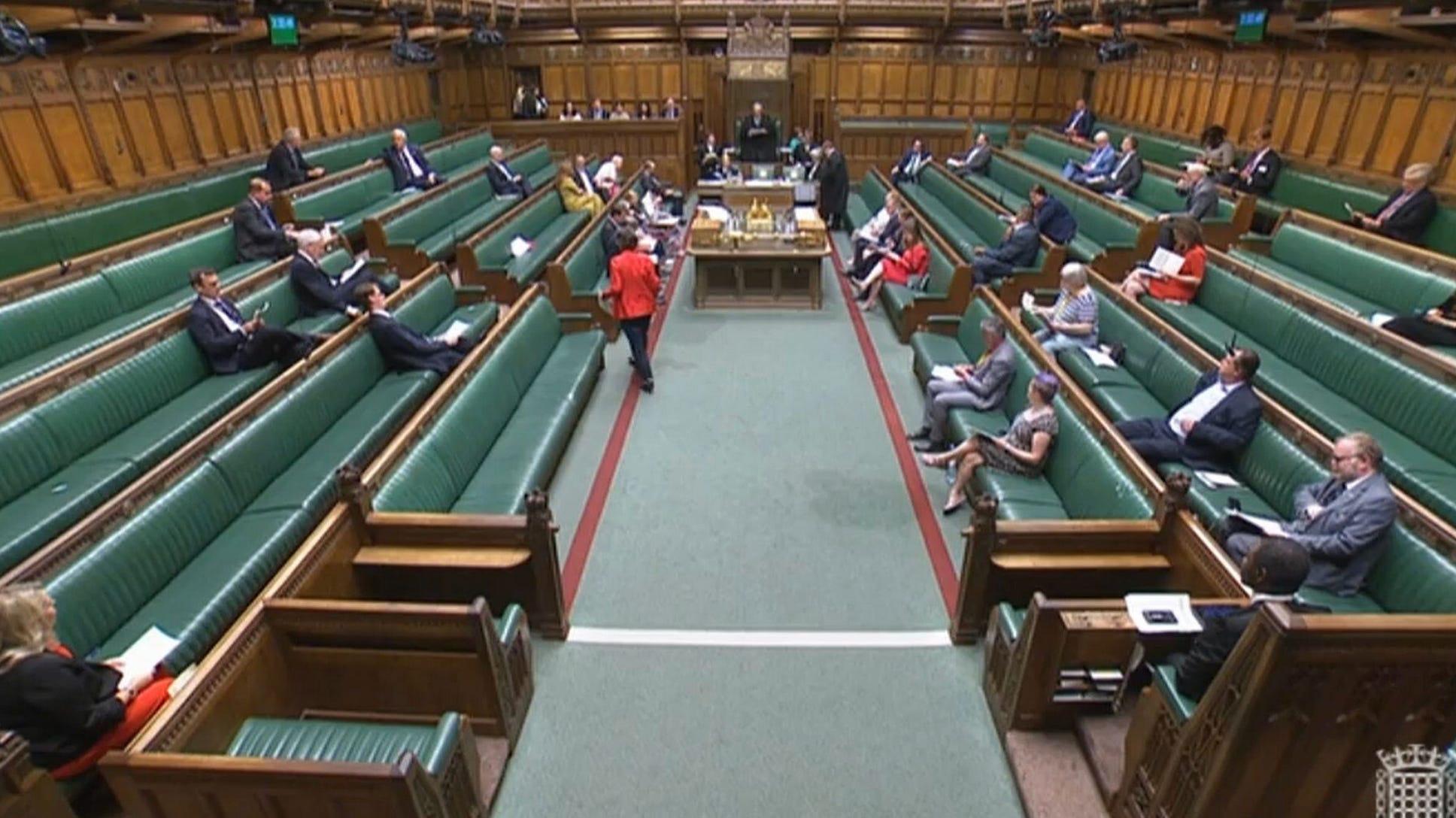
Moreover, producing the Code is a mammoth task requiring a great deal of specialist legal input. Scrutinising it would, equally, be an immense undertaking, which would take up untold hours of parliamentary time and would demand a knowledge and understanding of the whole landscape of discrimination law that parliamentarians simply do not possess.
The business of parliament is to pass laws. Its job is not to publish guidance on the law nor to conduct periodic wholesale evaluations of the entirety of discrimination law. Producing guidance is pre-eminently a job for a specialist arms-length body like the EHRC. The best that parliament can hope to do is to satisfy itself that statutory guidance is legally sound and, perhaps, that it is useful.
Beyond that, parliament should not interfere with the work of an independent regulator. The Secretary of State having already satisfied herself of the legal integrity of the Code by way of a detailed review – and in this particular case we know that Bridget Phillipson MP had the revised Code on her desk for almost nine months before bringing to parliament, and so must have conducted a very detailed review indeed – for practical purposes parliamentarians should really only interfere if they have good reason for doubt as to the legal accuracy of the Code in some particular respect. For those purposes, the negative procedure is perfectly adequate.
These points having been made to Creasy on X yesterday, she was asked to identify what it was in the Code that she considered to be legally erroneous and in need of better scrutiny. Answer, predictably, came there none. This morning, Creasy has positively declined to engage with the question.

Creasy’s reticence is predictable because the substantive objections so far raised by her and others who wish to prevent the Code being passed have not been about how accurately it articulates the law. They have been about the law itself.
Specifically, what these MPs apparently do not like is the fact that self-ID is not the law. All the indications are that, in their view, men who identify as women should be permitted access – whether as of right or by permission of the service provider – to women’s toilets, rape crisis services, prisons, associations, sports and so on. In turn, that position is born of the fact that they subscribe to the minority view that men who identify as women actually are women.
But if Creasy et al want to change the law to introduce self-ID, they will have to do a great deal more than block the Code of Practice. They will have to undertake a root and branch revision of the Equality Act 2010, starting with either replacing the protected characteristic of sex with a protected characteristic of “gender identity” or inserting “gender identity” somewhere into the Act.
Either way, this would effectively dismantle the Act’s protections against sex and sexual orientation discrimination. The destruction of women’s and LGB people’s rights that would ensue can hardly be overstated. We only need look at Australia for an illustration, where the existence of a protected characteristic of gender identity in the country’s Sex Discrimination Act 1984 has resulted in lesbians having to apply for a special exemption to allow them lawfully to associate together without admitting heterosexual men who identify as women.

Back at home, the likely popularity of such a move is amply demonstrated by what happened in 2022 when the Scottish Government attempted to introduce self-ID, albeit through a different and arguably less damaging legal mechanism. The Scottish people had to be rescued from that imminent disaster by the intervention of the UK government in Westminster, which stepped in to kill the legislation by way of section 35 of the Scotland Act 1998. Nicola Sturgeon’s reputation never recovered.

The entire country may now be facing a similar catastrophe. If the arcane parliamentary procedure of the Early Day Motion is in fact the first step in a plan to reverse For Women Scotland and amend the Equality Act 2010 to introduce self-ID, then the public – and women and LGB people in particular – deserve to know about it.